New publication: The hierarchical morphotope classification
We are happy to share a new publication co-authored by members of our team.
The article “The hierarchical morphotope classification: A theory-driven framework for large-scale analysis of built form” has just been published in Cities.
We are especially proud that several (former) members of our team contributed to this work: Martin Fleischmann, Krasen Samardzhiev and Anna Brázdová.
The paper introduces a novel, theory-grounded approach to classifying urban form, offering a reproducible and scalable method for capturing the complexity of urban structures. By combining conceptual clarity with data-driven techniques, it contributes to a more nuanced understanding of spatial patterns and urban morphology, with potential applications in urban research, planning, and policy.
Read the article: https://www.sciencedirect.com/science/article/pii/S0264275126002799
Doctoral position: Interaction between variant forms of spatial mobility within the settlement system
A new position for doctoral studies is available under the supervision of our research team leader Martin Ouředníček. The deadline for applications is 15. 12. 2025!
The changing urbanization and urban processes are increasingly linked to international migration and significantly affect daily mobility within metropolitan areas. A number of traditional urban functions are partially or completely disappearing from the physical space, and thus the localization factors of these functions are also changing. As a result of digitization and the Covid-19 pandemic, work, services, shopping, entertainment, education and leisure activities are decentralized from urban cores and delocalized outside the physical world in the form of home offices, e-jobs, e-services, e-shops, e-learning. Following the theoretical concepts of structuration theory, mobility transition, pacemakers and heterolocalisation, the aim of the dissertation project is to describe and explain how the processes of intensive international migration, especially to large cities, are interrelated with gentrification and subsequent decentralization of the residential function of the urban population (suburbanisation, counter-urbanisation). Changes in migration flows subsequently also affect the relationship between the location of residence, workplace, services and leisure activities and daily activity systems within metropolitan regions shaped by new forms of spatial mobility.
- Title: Interaction between variant forms of spatial mobility within the settlement system
- Department: Department of Social Geography and Regional Development (31-340)
What will be the main focus?
The main focus will be on comparative research of European cities.What methods are expected to be used?
Methodologically, the dissertation should use mixed research based on the triangulation of methods of quantitative analysis of traditional statistical data (population census, ongoing migration records), big data (data from mobile operators, GPS, social networks) and case studies in selected European cities. A PhD candidate would participate in the research project within the consortium of Charles University, Masaryk University and Academy of Science A Mobile Society: Opportunities and Risks of New Forms of Mobility for Czech Society and Economy.Requirements for potential doctoral candidates:
- Analytical thinking ability
- Theoretical background in urban social geography
- Teamwork
- Ability to write academic texts
- Skills in the collection, management and analysis of statistical and spatial data
Further information
- More information about the position: https://is.cuni.cz/studium/eng/dipl_st/index.php?do=main&doo=detail&did=289665
- More information about PhD studies and application submission at the department: https://natur.cuni.cz/en/admissions/study-programmes/doctoral-studies/geography/social-geography-and-regional-development
New paper: Comparative study of socio-economic segregation in European capital city regions.
New publication on urban governance and culture-led regeneration of former military barracks
A new article has been published in Urban Affairs Review by Taja Ivanc and Adela Petrovic.
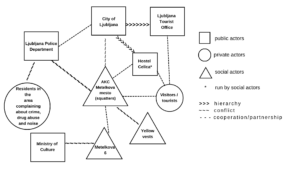
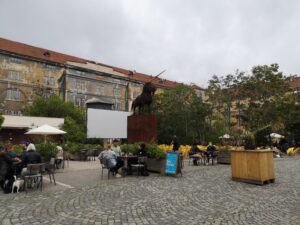
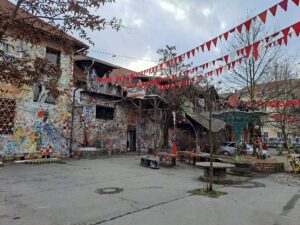
The text examines how cultural spaces emerging from former military sites, such as Kasárna Karlín and Metelkova, navigate shifting urban policies and institutional pressures that often commodify their original purposes. It argues that autonomous, tactically engaged practices may foster greater cultural resilience than formalised partnerships, challenging dominant narratives of participatory governance in urban redevelopment.The article can be found here, and a shorter version as a blog post can be found here.

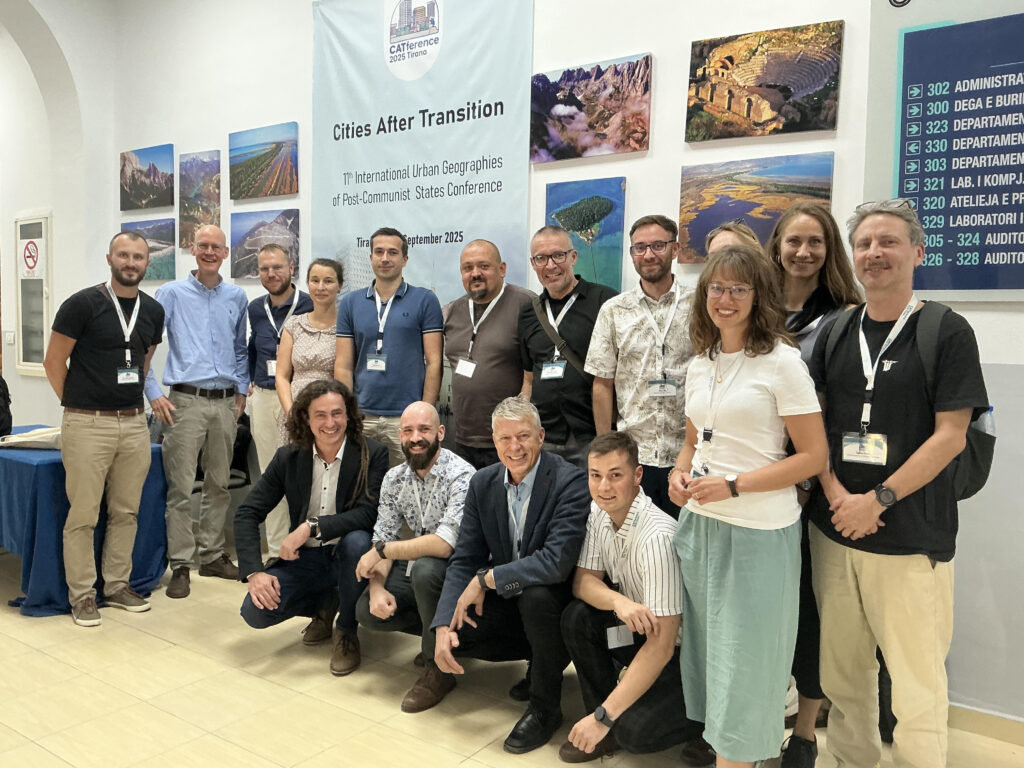
CATference 2025 in Tirana
What presentations did our team give at the conference?
- New socio-spatial differentiation finally comes: Mapping of segregation in Prague Metropolitan Area 2001–2011–2021 (Martin Šimon, Martin Ouředníček)
- At the Edge: Migration and Peripheralization in Czechia’s Westernmost Region (Adam Klsák, Jiří-Jakub Zévl, Jiří Nemeškal)
- Mapping gentrification in Prague inner city neighbourhoods: a quantitative analysis (Martin Ouředníček, Adela Petrović)
- Housing Choices of Young Families: Housing Estate, Inner-City Neighbourhood, or Both? (Petra Špačková, Niloufar Ghafouriazar)
Registration open for Urban Regulations and Political Memory – an international and interdisciplinary course for this winter semster
4EU+ Course
Urban Regulations and Political Memory: Towards Understanding Spatio-Temporal Aspects of Urban Development (UNREAD)
Course description:
„Urban Regulations and Political Memory: Towards Understanding Spatio-Temporal Aspects of Urban Development” is an international, interdisciplinary course organised by five 4EU+ member universities: University of Warsaw, University of Milan, Charles University, Sorbonne University, Heidelberg University as part of the 4EU+ joint educational offer during the academic year 2025/2026.
Key topics of the course are the driving forces of urban changes, development of smart cities and interdisciplinary methodologies of urban studies. The course is developed as part of an educational project which addresses changes in the conditions of the urban development of smart cities in Poland, Italy, Czechia and Germany, according to three dimensions: past (history), present (law) and future (geography). Emphasis is put on integrated and interdisciplinary approach in order to help students understand the complexity of new urban centres in which real estate development must coexist with the protection of the environment and with the history and heritage of the local community.
The course will be conducted by an interdisciplinary team of historians, lawyers, geographers and educational sciences specialists.- Course dates: virtual part – Wednesdays afternoons, starting from 8 October 2025 (13:15-14:45 / 13:15-15:45 / 13:15-16:30); on-site part 23-27 February 2026
- Language of instruction: English.
- Number of online didactic hours: 47 (lectures and workshops): 27 virtual hours (October – December 2025), 20 on-site hours (23-27 February 2026)
- Assessment methods and conditions for obtaining credit: Group work: producing an essay and delivering a presentation (each student group has to comprise participants from different universities). Essays will be presented at a face-to-face conference (2 days) held at the University of Warsaw in February 2026 during 5 days on-site period of the course.
- ECTS: 6.
How to apply?
- The students will be selected based on their CV and motivation letter.
- The deadline for sending the documents is 23 September 2025.
- The CV and the motivation letter should be sent as a single PDF document to unread@wpia.uw.edu.pl
- The file’s name should contain the applicant’s name (surname_name.pdf), and the subject of the email should be “UNREAD recruitment”.
- The motivation letter should indicate the students’ objectives and motivations for taking the course.
- The motivation letter should not exceed 1,000 characters.
Registration open for Urban Regulations and Political Memory – an international and interdisciplinary course for this winter semster
4EU+ Course
Urban Regulations and Political Memory:
Towards Understanding Spatio-Temporal Aspects of Urban Development (UNREAD)
Course description: „Urban Regulations and Political Memory: Towards Understanding Spatio-Temporal Aspects of Urban Development” is an international, interdisciplinary course organised by five 4EU+ member universities: University of Warsaw, University of Milan, Charles University, Sorbonne University, Heidelberg University as part of the 4EU+ joint educational offer during the academic year 2025/2026. Key topics of the course are the driving forces of urban changes, development of smart cities and interdisciplinary methodologies of urban studies. The course is developed as part of an educational project which addresses changes in the conditions of the urban development of smart cities in Poland, Italy, Czechia and Germany, according to three dimensions: past (history), present (law) and future (geography). Emphasis is put on integrated and interdisciplinary approach in order to help students understand the complexity of new urban centres in which real estate development must coexist with the protection of the environment and with the history and heritage of the local community. The course will be conducted by an interdisciplinary team of historians, lawyers, geographers and educational sciences specialists. Course dates: virtual part – Wednesdays afternoons, starting from 8 October 2025 (13:15-14:45 / 13:15-15:45 / 13:15-16:30); on-site part 23-27 February 2026 Language of instruction: English. Number of online didactic hours: 47 (lectures and workshops): 27 virtual hours (October – December 2025), 20 on-site hours (23-27 February 2026) Assessment methods and conditions for obtaining credit: Group work: producing an essay and delivering a presentation (each student group has to comprise participants from different universities). Essays will be presented at a face-to-face conference (2 days) held at the University of Warsaw in February 2026 during 5 days on-site period of the course. ECTS: 6.How to apply?
- The students will be selected based on their CV and motivation letter.
- The deadline for sending the documents is 23 September 2025.
- The CV and the motivation letter should be sent as a single PDF document to unread@wpia.uw.edu.pl
- The file’s name should contain the applicant’s name (surname_name.pdf), and the subject of the email should be “UNREAD recruitment”.
- The motivation letter should indicate the students’ objectives and motivations for taking the course.
- The motivation letter should not exceed 1,000 characters.
Postdoctoral opportunity in urban socio-spatial mobility now open at Charles University!
Join our dynamic research team for a postdoctoral fellowship within the project “A Mobile Society: Opportunities and Risks of New Forms of Mobility for Czech Society and Economy”, funded by the Johannes Amos Comenius Programme (P JAC), Ministry of Education.
Research focus: New forms of socio-spatial mobility in metropolitan areas
The postdoc will explore:
- everyday and residential mobility in relation to social inequality
- urban processes shaped by migration, digitalisation, and flexible work
- Prague metropolitan area as the main case study
- either qualitative or quantitative approach (based on applicant’s expertise)
Other information
- Location: Urban and Regional Laboratory, Faculty of Science, Charles University, Prague
- Includes opportunities for teaching and developing follow-up grant proposals
- Start date: January 1, 2026 | Application deadline: August 1, 2025
- Contact: martin.ourednicek@natur.cuni.cz
More info & full call for applications: https://lnkd.in/ek5EthdH
A new paper about gentrification in a formerly working-class neighbourhood
A new paper has been published in Population, Space and Place. The authors are Adela Petrovic and Martin Ouředníček.
The paper on the basis of detailed migration data, shows the structure of in-migration (invasion of gentrifiers) and out-migration (displacement) in Karlín during the 2010-2020 period. In contrast to many authors from CEE countries, Adela and Martin argue that in selected neighbourhoods of Prague, classical gentrification has developed instead of other inner city transformation processes. Foreigners are the main group of gentrifiers, while the Czech population has the highest out-migration rate in recent years.